Redesigned a fragmented retail back-office into a unified operations platform—integrating orders, inventory, customers, and stores into one interface, reducing context switching and enabling data-driven decisions.
−75%
Tool-switching overhead
4 tools → 1 platform
+18.6%
Monthly revenue growth
First month post-launch
3 steps
To complete a restock
Down from 7 across 2 systems
29,827
Customer records unified
With full purchase history
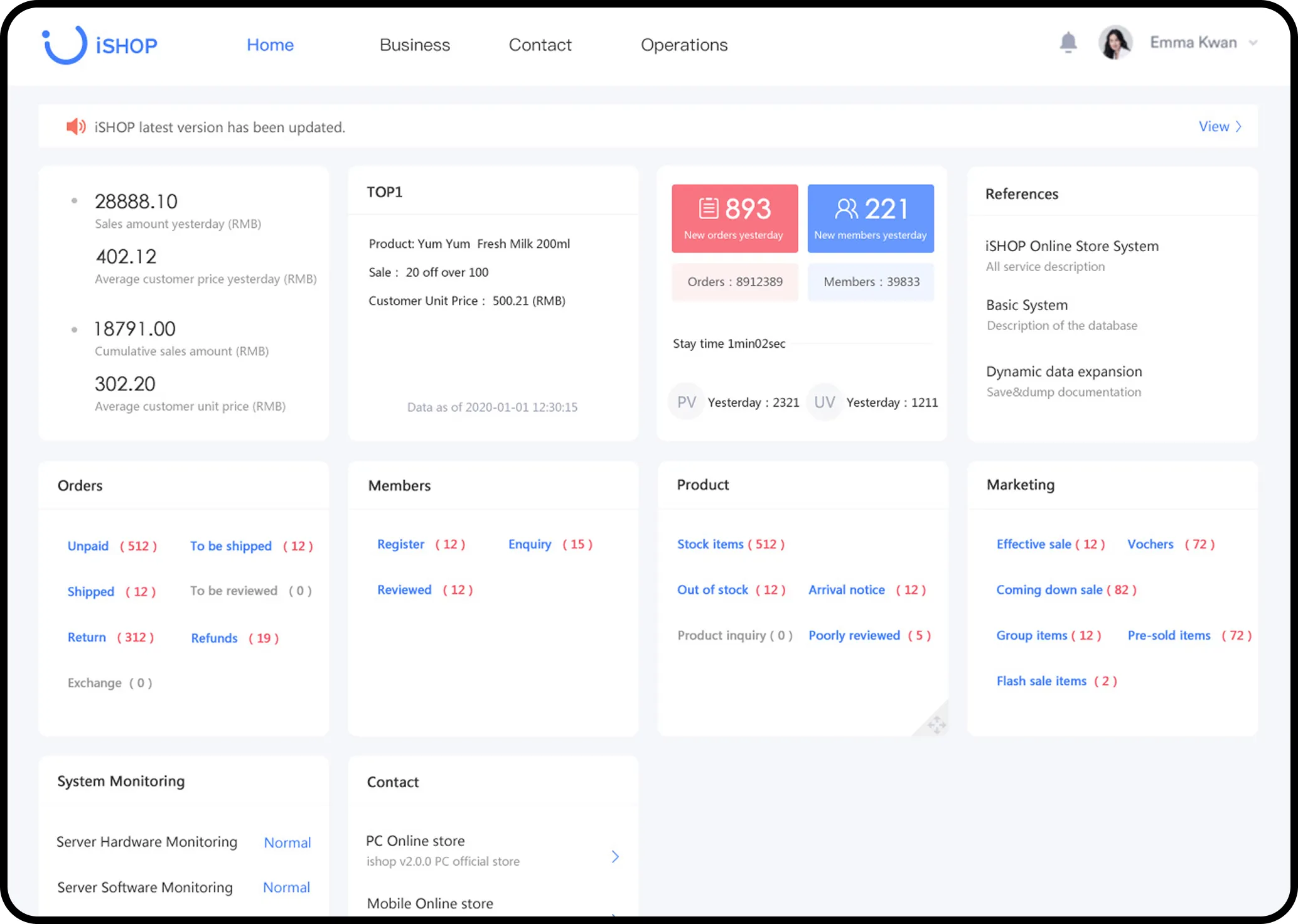
Before
No navigation structure — everything on one page
Data shown as raw numbers, no trends or context
Restock requires switching between 2 separate systems
No way to filter or search orders efficiently
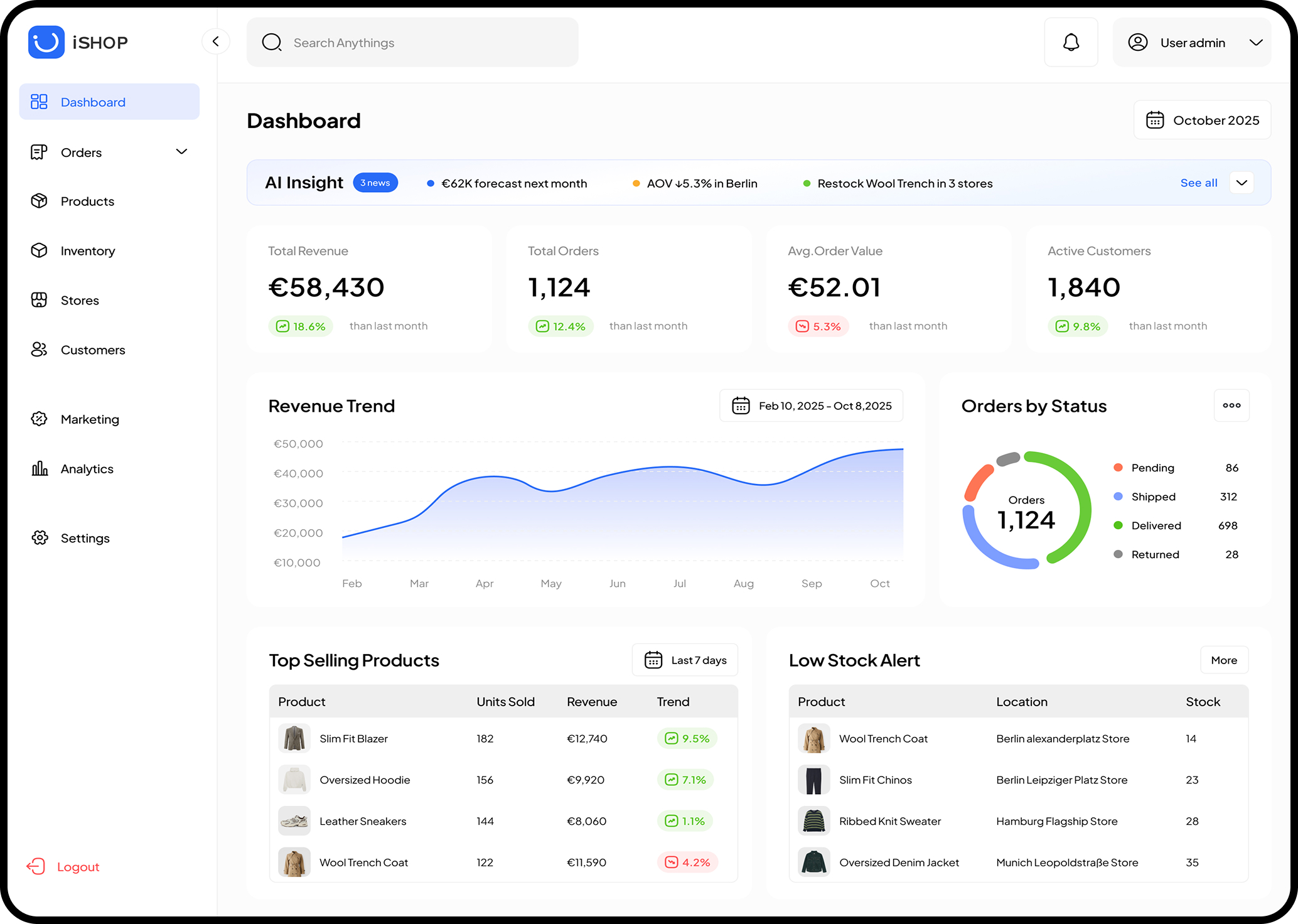
After
Sidebar navigation with clear module separation
Revenue trends, order status and stock alerts in one view
Restock triggered directly from inventory list
Advanced filters with payment status, value range, and fulfillment
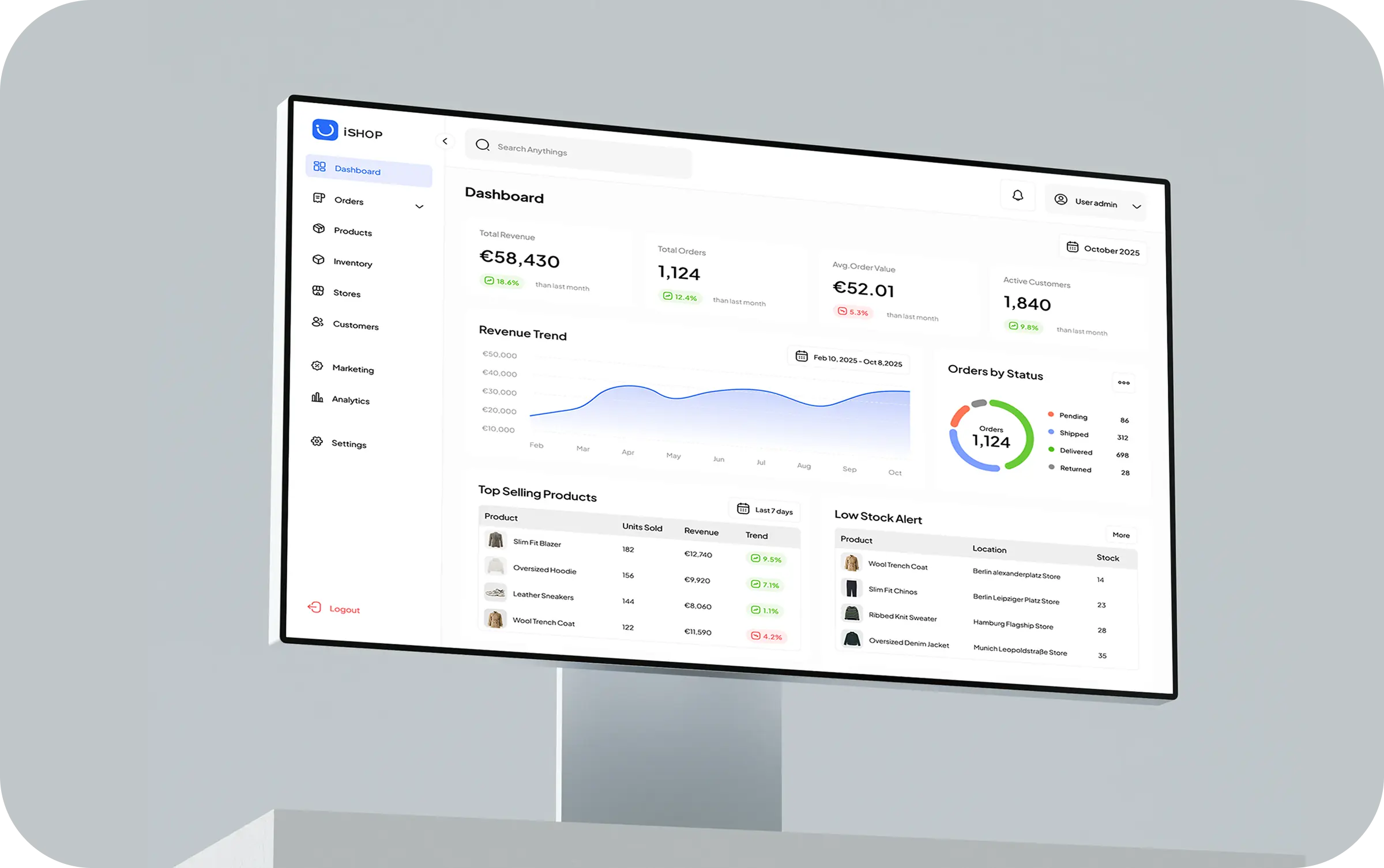
Dashboard
A unified operations view — revenue trends, order status, low-stock alerts, and top products visible at a glance. Replacing a morning ritual of opening 4 separate tools.
BeforeAfter
← Drag to compare →
Orders
A scannable, filterable order flow — from list to detail in one place. Advanced filters surface exactly what ops teams need, without manual export or tab-switching.
Replace with order.mp4
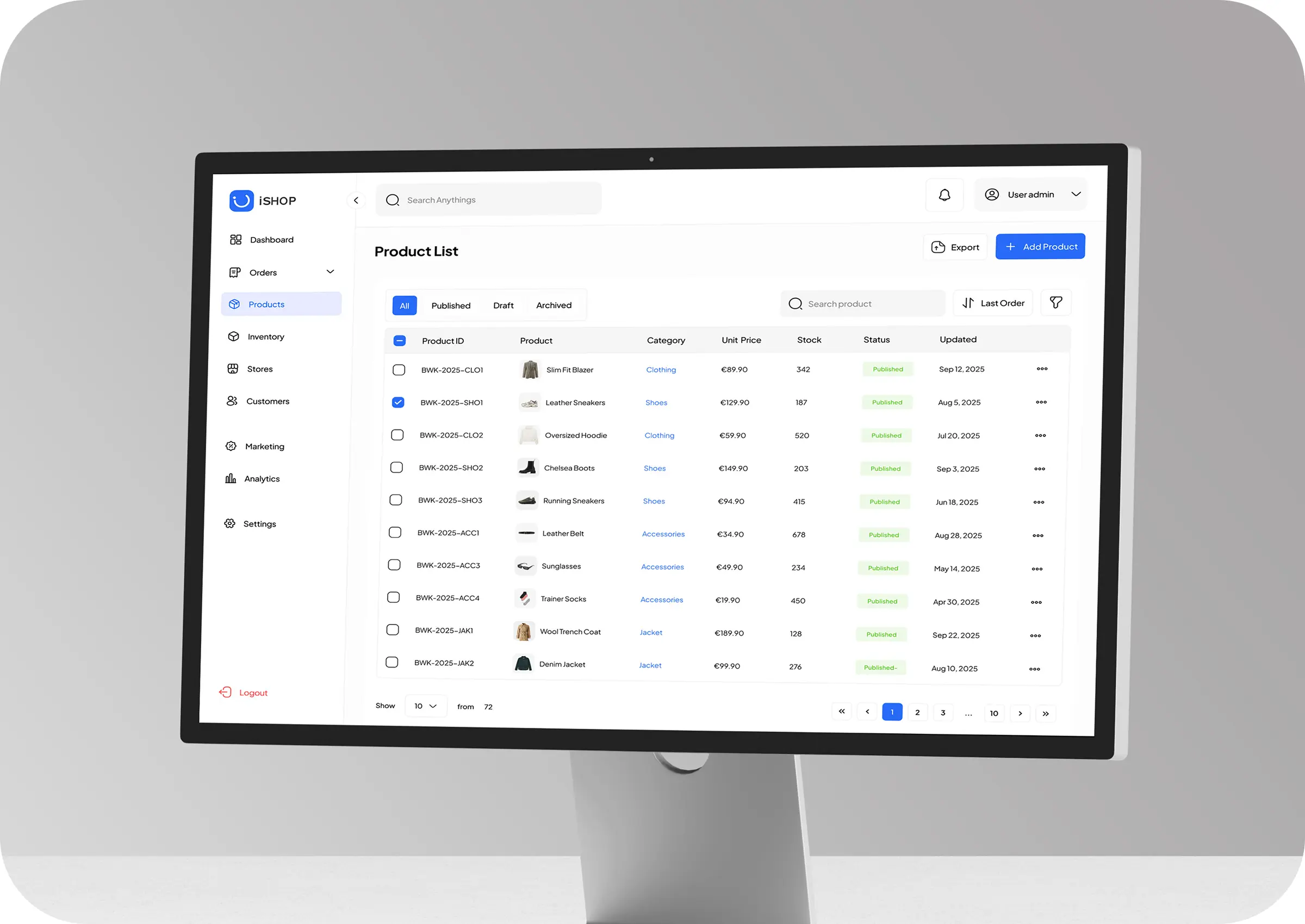
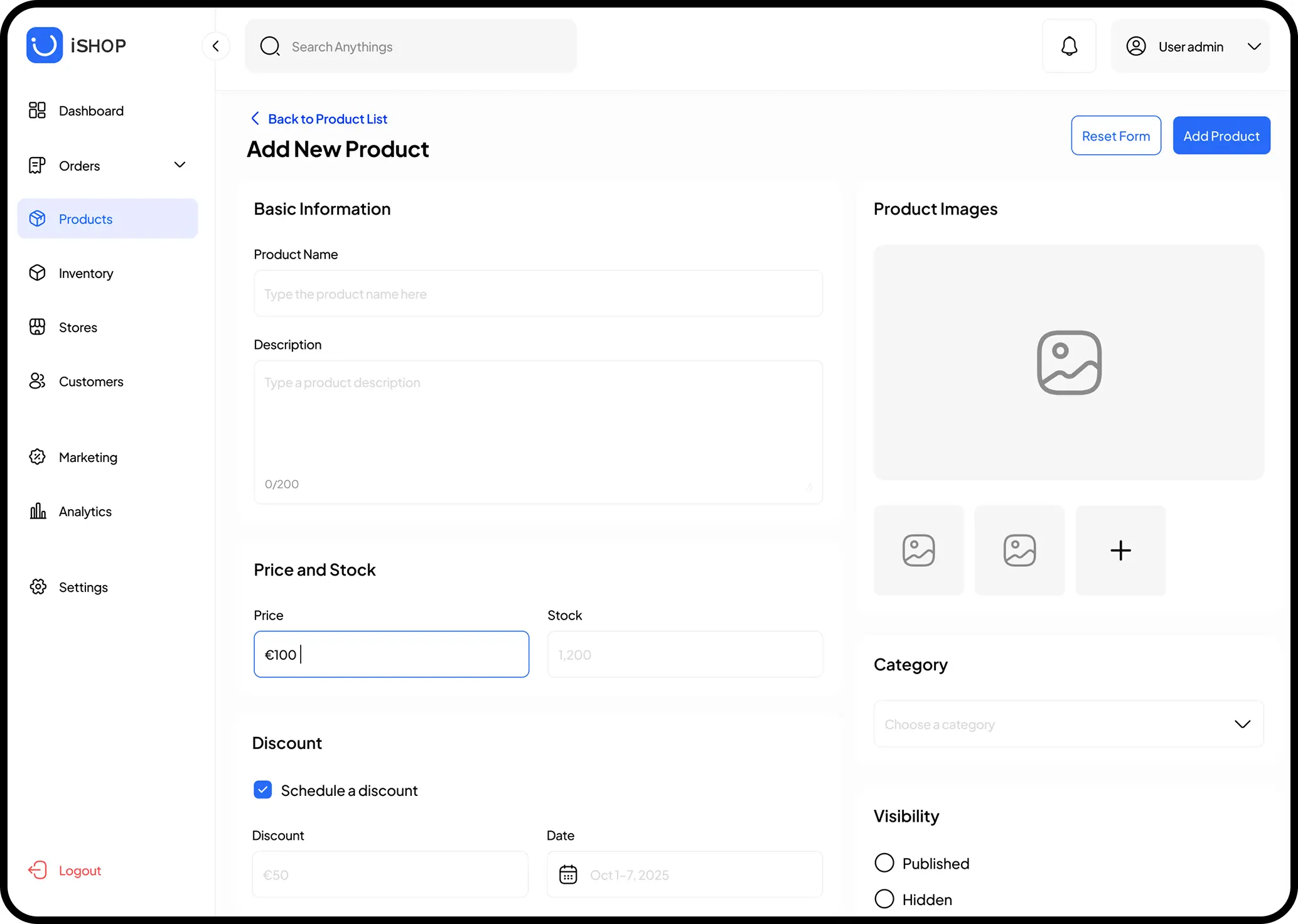
Products
A flexible catalogue with clear status tags and inline editing. Adding new products was redesigned to reduce input friction and support faster daily operations.
Inventory
Real-time stock visibility with proactive low-stock alerts. The restock workflow was redesigned from 7 steps across 2 systems down to 3 steps in one place.
Replace with inventory.mp4
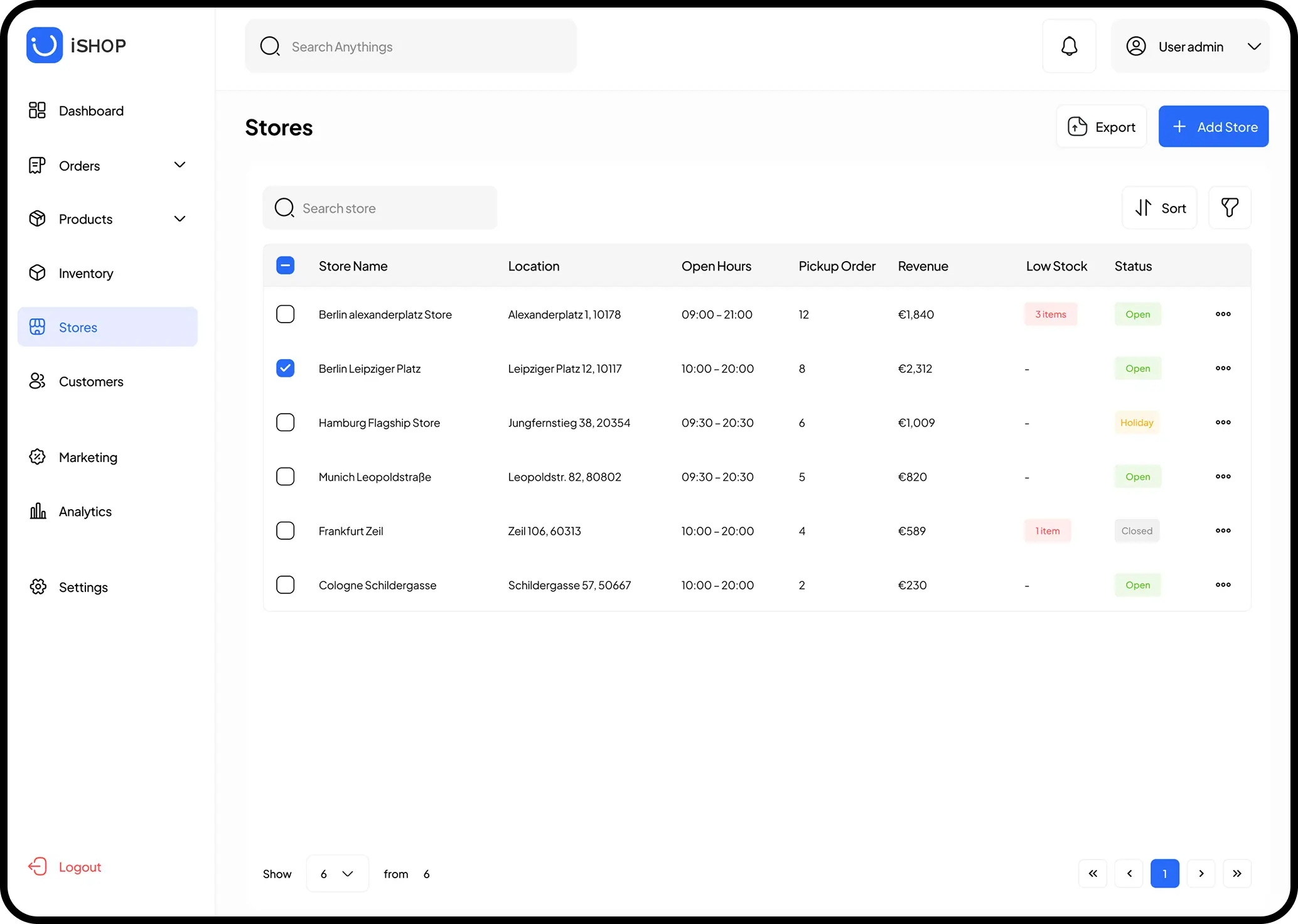
Stores
All locations in one view — open hours, revenue, pickup orders, and low-stock alerts per store. No more manual aggregation across separate reports.
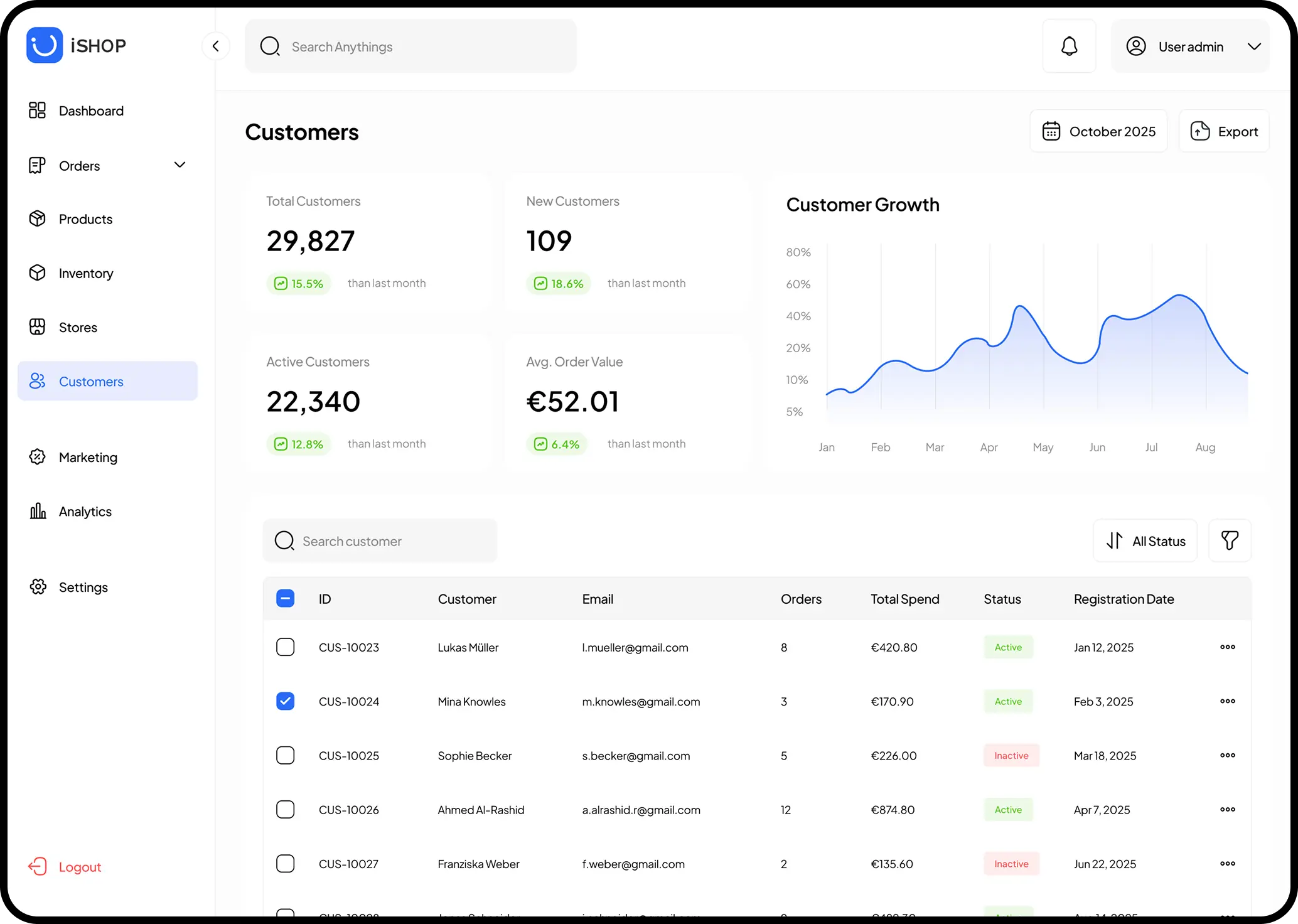
Customers
29,827 customer records unified with full purchase history and growth trends — replacing disconnected member data spread across separate systems.
Impact
✳Unifying fragmented tools into one platform reduced daily tool-switching overhead by 75% — proving that operational efficiency gains come from structure, not just features.
✳Surfacing data through trends and alerts, rather than raw numbers, gave the ops team faster visibility into revenue and stock — contributing to +18.6% revenue growth in the first month.
✳Redesigning the restock workflow from 7 steps to 3 showed that the biggest UX wins often come from removing steps, not adding them.